

If you are a small business owner, marketer, or in-house writer trying to get more value from your blog content, this guide is for you. We’ll look at the process through the lens of an SEO consultant in San Francisco, focusing on what actually helps content perform You will learn how to write content that ranks in today’s search environment, earns trust, and is easier for both Google and AI-powered search experiences to understand.
That matters now because SEO content is not just about inserting keywords. Google’s guidance still emphasizes helpful, reliable, people-first content, and it applies the same core SEO foundations to AI features like AI Overviews and AI Mode.
Key Takeaways
- A useful article can still underperform if the page is frustrating to use.
- Strong writing performs better when the page also signals credibility clearly.
- Modern SEO means people-first writing, content uniqueness, and AI-search readiness.
- Put the answer right below the heading, then expand with examples.
- Helpful content is specific, original, and grounded in real experience.
- Link to help the reader move, verify, or decide.
- Choose a keyword, but build the page around the reason someone searched it.
- A final review catches the issues that most often hold pages back.
How So You Choose the Right SEO Keywords?
A common mistake in content audits is picking a phrase without covering the intent behind it. That is how you get a page that mentions the keyword but still fails to rank well.
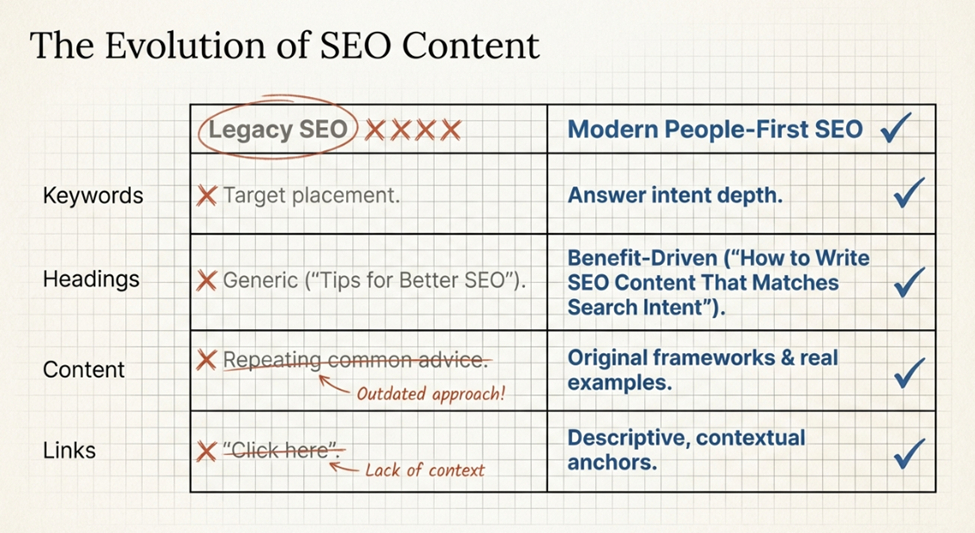
Take the keyword SEO consultant in San Francisco. A weak article treats it like a placement target. A stronger article asks what the reader actually wants:
- What does a good SEO consultant look for?
- What makes content rank now?
- How do I improve pages for search and AI visibility?
- What mistakes should I avoid?
That is intent depth. It helps one page answer the main query and the follow-up questions that come with it.
What Makes Content Helpful?
Google recommends creating content for people first, not search engines first.
One of the most common issues we see in underperforming drafts is sameness.
The article is technically correct, but it could have been written by anyone. There is no judgment, no example, and no real reason to trust it over competing pages.
Instead of saying, “write engaging headlines,” show the difference.
Weak headline: Tips for Better SEO Content
Improved headline: How to Write SEO Content That Matches Search Intent
The stronger version is clearer, more current, and more useful to the reader.
How Should You Structure Sections So They Rank and Read Better?
This is one of the easiest ways to improve both readability and search performanced. Start each section with a direct answer, then support it with explanation, examples, and next steps.
Before:
“There are many important things to think about when creating SEO content for websites and blogs.”
After:
“Start each section with a clear answer. Then add examples, proof, or process. That makes the page easier to scan and easier to trust.”
That second version is more snippet-friendly. Google says snippets are generated primarily from page content, and sometimes from the meta description when it better describes the page.
What Should Modern SEO Content Include?
Classic basics still matter, but they are not enough on their own.
People-First Content
Write to help the reader solve a problem, not just to rank for a phrase.
Content Uniqueness
Do not settle for “not duplicated.” Add something a competing article would not naturally include, such as a clearer framework, a real example, or a lesson from content reviews.
Search Intent Depth
Do not stop at definitions. Help the reader decide what to do next.
AI-Search Visibility
Google says there are no special requirements for AI features beyond the usual technical and content requirements. Pages still need solid SEO foundations and must be eligible to appear with snippets.
Which Article Elements Improve Trust?
For blog content, include:
- A real author byline
- A visible publish or updated date
- A clear H1
- A concise title tag
- A unique meta description
- Article structured data where appropriate
Google says visible dates should be featured prominently, and Article structured data can help Google better understand the page and show better title text, images, and date information in search results. It also recommends descriptive, concise title text.
How Should You Use Links?
Internal links should guide the next step. External links should support claims with credible references.
Anchor text matters too. Google recommends descriptive, concise anchor text because it gives readers and search engines better context.
So instead of: “click here”
Use: “Google’s guidance on people-first content”
What Page Experience Issues Can Hurt Good Content?
Google uses mobile-first indexing, so your mobile experience matters.
Watch for issues like:
- Long, dense paragraphs
- Slow-loading templates
- Intrusive popups
- Weak contrast or hard-to-read text
- Too much clutter above the main content
A strong article should feel easy to consume on a phone, not just on a desktop preview.
3 SEO Content Mistakes to Avoid
- Targeting a keyword without matching the real intent
- Publishing generic advice with no examples or first-hand insight
- Hiding useful content inside a poor reading experience
What Should You Check Before You Publish?
Good SEO content should be genuinely useful, clearly structured, and specific enough to deserve attention.
Before You Publish Checklist
- Is the primary keyword used naturally in the title, H1, and intro?
- Does the intro clearly say who the article is for and what they will learn?
- Does each main section begin with a direct takeaway?
- Are there concrete examples instead of broad claims?
- Is there something original in the article?
- Are the title tag and meta description specific and useful?
- Does the page include a byline and publish or updated date?
- Is the article easy to read on mobile?
- Are internal and external links relevant and clearly labeled?
Visual ideas to add before publishing:
A headline before-and-after graphic, and a boxed version of the checklist above.
Get Help Turning Your Content into Results with WSI Smart Marketing
Want help reviewing existing content?
WSI Smart Marketing can help you identify what is holding your pages back and where the biggest SEO opportunities are. Reach out to our team to review your current content and plan your next steps.
📞 Call us at: (707) 843-3714

Recent Comments