

Your next customer may never see a search results page. She asks ChatGPT which brand builds competition bikinis for her division, reads the answer, and buys. Toxic Angelz Bikinis is already winning that conversation, and their multi-platform search visibility numbers put a figure on what winning it is worth.
Key Takeaways
- AI-referred sessions grew from 48 in 2025 to nearly 1,000 in 2026, roughly 20 times the prior year.
- The work came down to 3 moves in Q1 2026: machine-readable product data, content written as direct answers, and a technical foundation AI crawlers can reach.
- Visitors arriving from an AI assistant engage with the site at 88.8%, which is the strongest signal in the whole dataset.
The Numbers
| ~1,000 | AI sessions in 2026 |
| ~20x | Growth over 2025 |
| 73 | AI citations |
| 88.8% | Engagement rate |
Toxic Angelz now ranks first among WSI’s 56 client accounts for AI-referred traffic.
About Toxic Angelz Bikinis
Toxic Angelz Bikinis builds competition bikinis for bodybuilding athletes who research before they spend. Fit, fabric, cut, turnaround time. Every detail gets questioned, and the brand that answers clearly gets the order.
That buyer behavior turns out to matter enormously for how this story played out.
The Challenge
Through 2025, that research ran through Google. By early 2026 it was migrating into AI assistants, where Toxic Angelz had almost no footprint at all: 48 sessions across the entire year.
Strong organic rankings had stopped guaranteeing visibility. AI assistants read product data, quote specifications, and name brands directly. A catalog can rank on page one and still go unmentioned when a shopper asks an assistant what to buy.
For a brand whose customers ask detailed questions before purchasing, being absent from the tool answering those questions is an expensive place to be.
What We Did
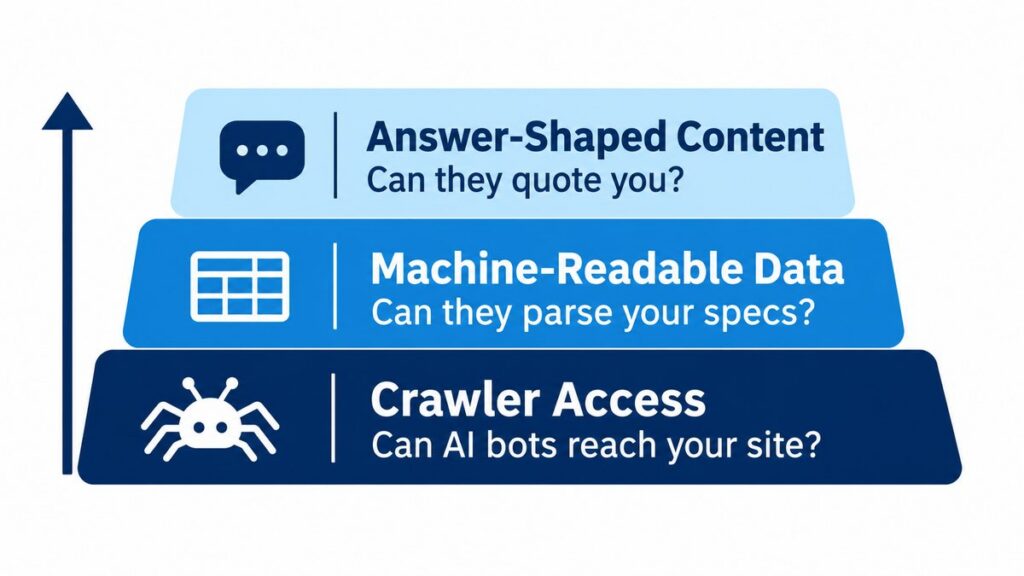
Work started in Q1 2026 with three moves.
Made the Product Data Machine-Readable
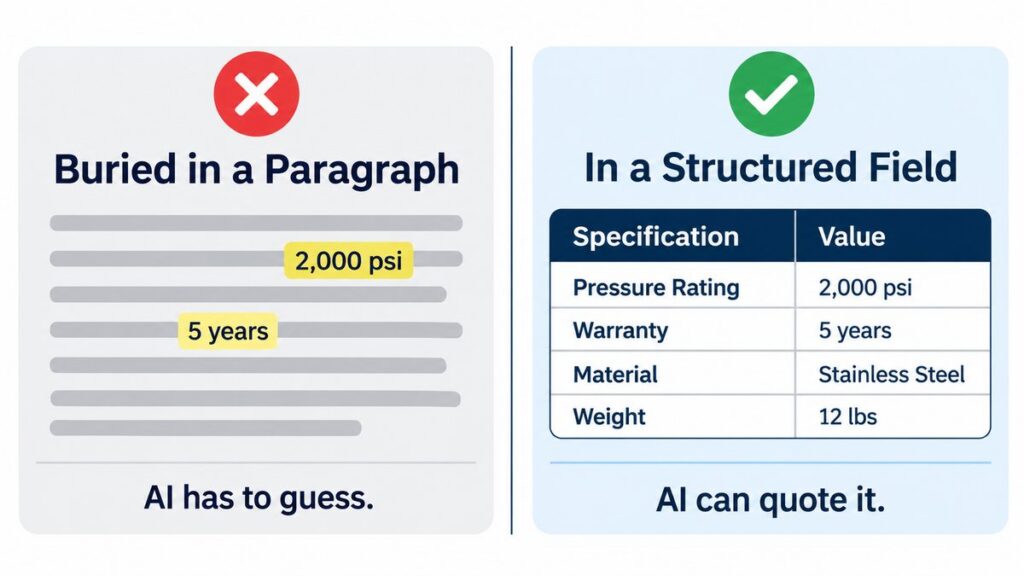
We rebuilt structured data across the catalog, covering Product, Offer, and Review schema, and cleaned the product feed so every attribute an assistant might quote sits in a field it can parse: sizing, fabric, cut, colorway, availability.
Specification tables now carry the details that once lived inside paragraph copy. An assistant can pull a fabric weight from a table. It has a much harder time finding the same number buried in the fourth sentence of a product description.
Wrote Content Shaped Like Answers
Buying guides, fit and sizing explainers, and comparison pages, each built around the exact questions athletes ask.
Every page opens with a direct answer and supports it underneath. Assistants extract and cite that structure, which is why the shape of the page matters as much as the accuracy of what is on it.
Rebuilt the Technical Foundation for AI Crawlers
We opened crawl access for AI bots, accelerated page delivery, and simplified the architecture so assistants reach the full catalog without friction.
This is the step most brands miss. A site can be perfectly written for AI answers and still be unreachable by the crawlers that would quote it.
The Results
AI-referred sessions climbed from 48 in 2025 to nearly 1,000 in 2026, roughly 20 times the prior year
73 citations across ChatGPT, Google AI Overview, and Gemini
First place among WSI’s 56 client accounts for AI-referred traffic
88.8% engagement rate from AI-assistant visitors
The brand attributes tens of thousands of dollars in 2026 revenue to AI-assistant discovery, based on their own order review and customer conversations.
Why the Engagement Rate Is the Number to Watch
88.8% deserves more attention than the session count.
Traffic volume tells you a channel exists. Engagement tells you the visitors arrived with intent. Someone who reads an AI answer, sees a brand named as the right choice for their division, and then visits the site is already most of the way to a decision. They are not browsing.
That pattern is why AI referrals can move revenue at volumes that would look small in a traditional traffic report.
What a Sonoma County Trade Business Can Take from This
Competition swimwear and roofing have nothing in common. The mechanics do.
Be Specific
Your specifications are your product data. A contractor’s version of sizing and fabric is service areas, materials, warranty terms, and response times. Put those in structured fields and tables rather than inside paragraphs.
Answer First
Answer the question first. The athletes asking about fit are the homeowners asking how long a re-roof takes. Open the page with the answer.
Audit Your Site
Check whether AI crawlers can reach you at all. No amount of good content matters if the bots cannot get to it.
Start Where You Are
A small baseline is not a barrier. Toxic Angelz started from 48 sessions. Ryan Kelly made the same point on the AI on the Fly video series:
“AI really only cares about whether or not you have the best answer to a question right now. It could be the first blog you’ve ever written.”
Where This Goes Next
AI assistants recommend the brands whose data they can read and whose content answers the question in front of them. Toxic Angelz reached that position ahead of everyone else in competition swimwear. Your category still has room at the front.
What to Do Next
- Find your baseline this week.
- Check your analytics for referrals from ChatGPT, Gemini, Perplexity, and Claude.
- Whatever the number is, write it down. Toxic Angelz started at 48.
- Audit your own data fields. List the 10 specifications a customer asks about most. Check whether each one lives in a structured field or inside a paragraph.
- Get the full audit. WSI’s free AI search audit reports which tools cite you, which questions you appear for, and which ones your competitors own.
Want to Know If AI Tools Recommend You?
WSI Smart Marketing will run the audit and show you exactly which questions your competitors are winning inside AI answers, plus what your current AI referral baseline looks like. It takes one conversation, it costs nothing, and you keep the findings either way.
Related posts you might find helpful:
Frequently Asked Questions
How long did these results take?
The AI work began in Q1 2026. AI-referred sessions went from 48 across all of 2025 to nearly 1,000 across 2026, so the growth landed inside a single year of the work starting. Structured data and technical fixes register faster than most organic work, because there is no ranking competition to climb through.
What counts as an AI citation?
An instance where an AI tool names or links your business inside a generated answer. Toxic Angelz holds 73 across ChatGPT, Google AI Overview, and Gemini. It is a separate measurement from sessions, because plenty of AI answers name a brand without the reader clicking through.
This is an eCommerce brand. Why should a contractor read it?
Because all three moves translate. Structured data becomes your service and materials details, answer-shaped content becomes your service pages, and crawler access is identical work on any site. What changes is the size of the catalog and the geography.
Is an 88.8% engagement rate normal?
It is high, and the reason is the traffic source rather than the website. Someone who arrives after an AI assistant named your brand as the right answer has already done their comparison shopping. Engagement rates from AI referrals tend to run well above general organic traffic for that reason.
How do I find out what my AI referral baseline is?
Check your analytics for referral traffic from ChatGPT, Gemini, Perplexity, and Claude. That gives you a rough number. For the full picture, including which questions you appear for and which ones you miss, an audit with citation tracking behind it is the reliable route.
Recent Comments